

One task, from start to finish.
These six hypothetical examples show what a focused solution could do.
“Your part” is tailored to the task. “Already built” means functions we can draw from the shared foundation. We agree which ones each solution needs.
From bookings to servicing.
Example 01
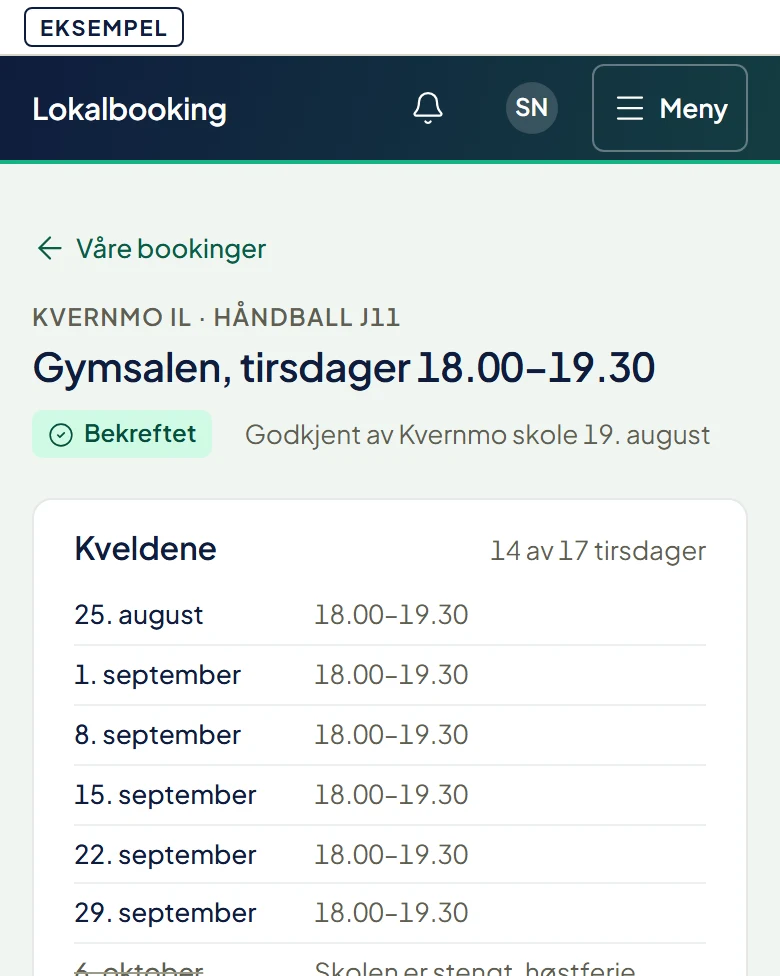
From an available venue to a confirmed booking
A sports club wants to use the gym. Today, that means email, a spreadsheet and someone who remembers. A booking system could show available times, take the request and send confirmation once the booking is approved.
- Your part
- Venues, who can book, approval, pricing rules and seasons.
- Already built
- Sign-in for clubs and associations, roles, notifications and traceability.
Example 02
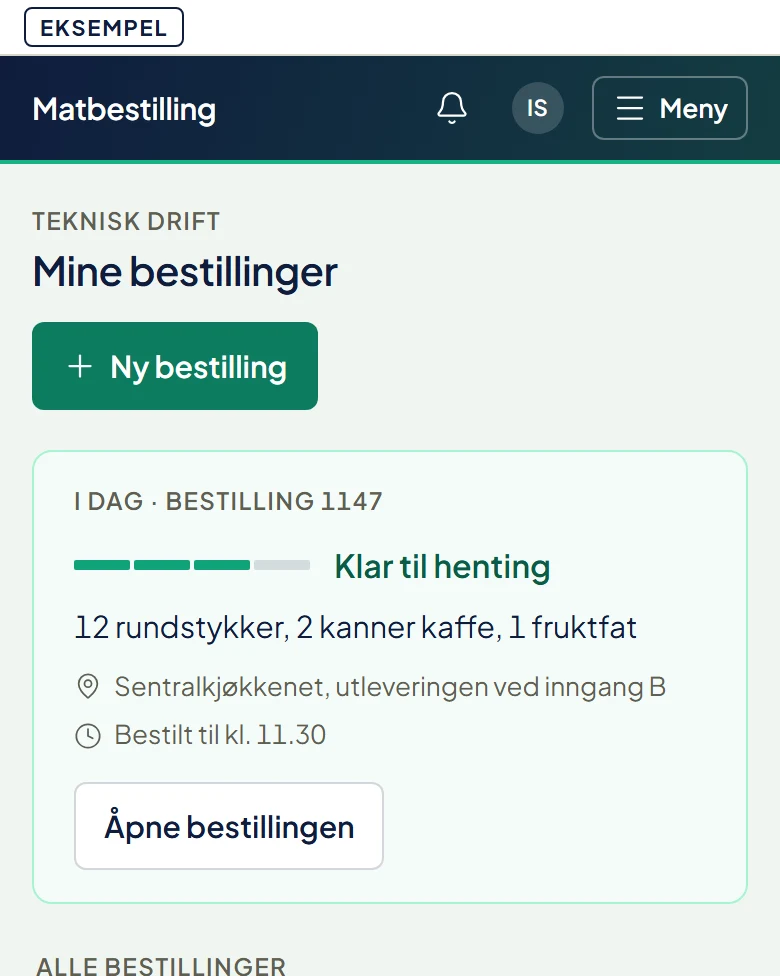
Orders in, status updates out
Departments order food from the kitchen and call to ask whether it is ready. An ordering tool could let them choose from the menu, see the price and place the order. The kitchen updates the status, and the department is notified when the food is ready to collect.
- Your part
- The menu, pricing rules, order deadlines and who can order what.
- Already built
- Customer sign-in, roles, notifications and tools for API integration.
Example 03
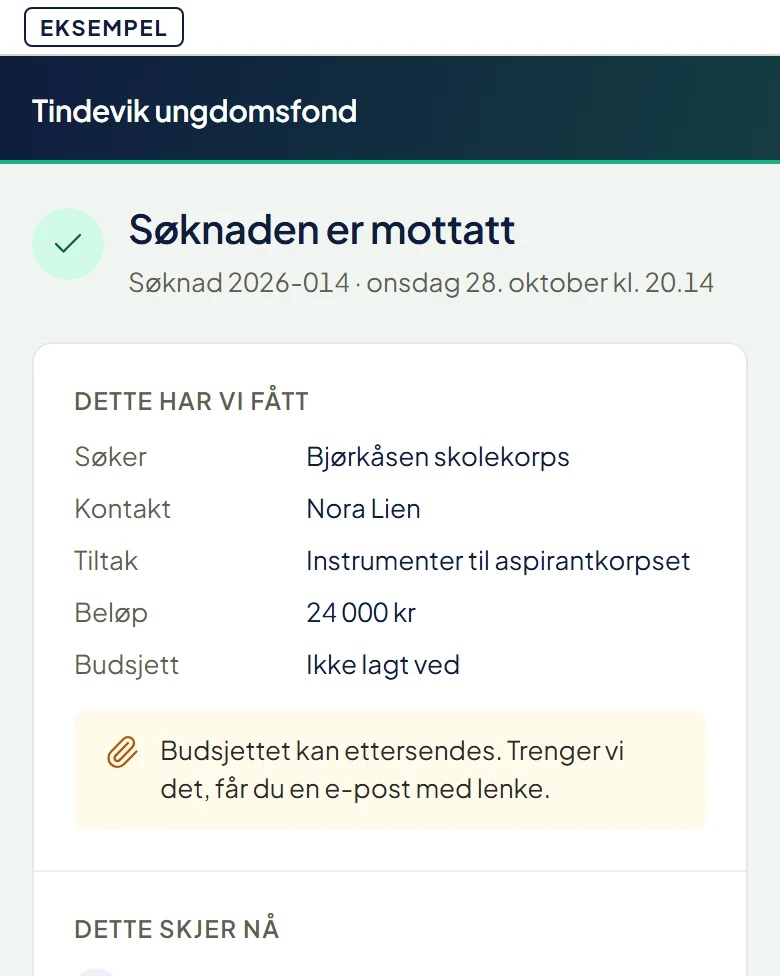
From application to response
An association receives funding applications by email. A solution could bring the application, assessment and response together in one case. The person handling it can see what is missing and who needs to approve it before the response is sent.
- Your part
- The form, assessment criteria, approvers and the letter sent in response.
- Already built
- Online forms, roles, deadlines and reminders, audit logs and rule-based deletion.
Example 04
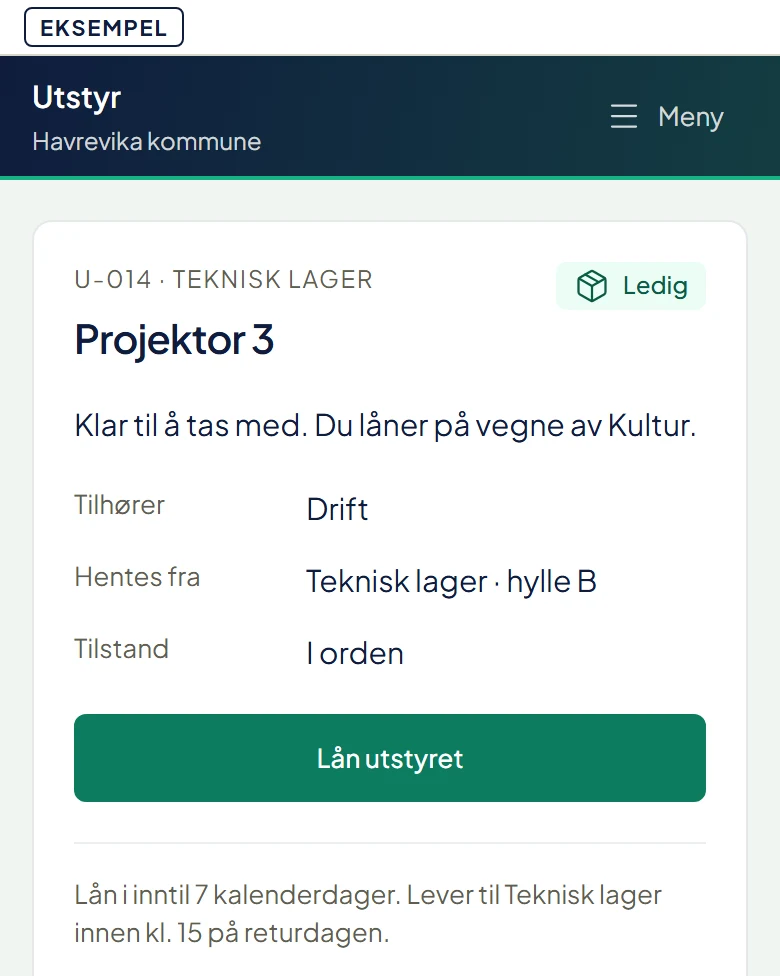
Who has what, and when is it due back?
Equipment is shared between departments, but the spreadsheet does not always show who has it. An equipment loan register could let the person collecting it record the loan and agreed return date. A QR code on the equipment opens the right record, including when it is returned.
- Your part
- The equipment, who can borrow it and the rules for loans and returns.
- Already built
- Roles, notifications, traceability and QR codes.
Example 05
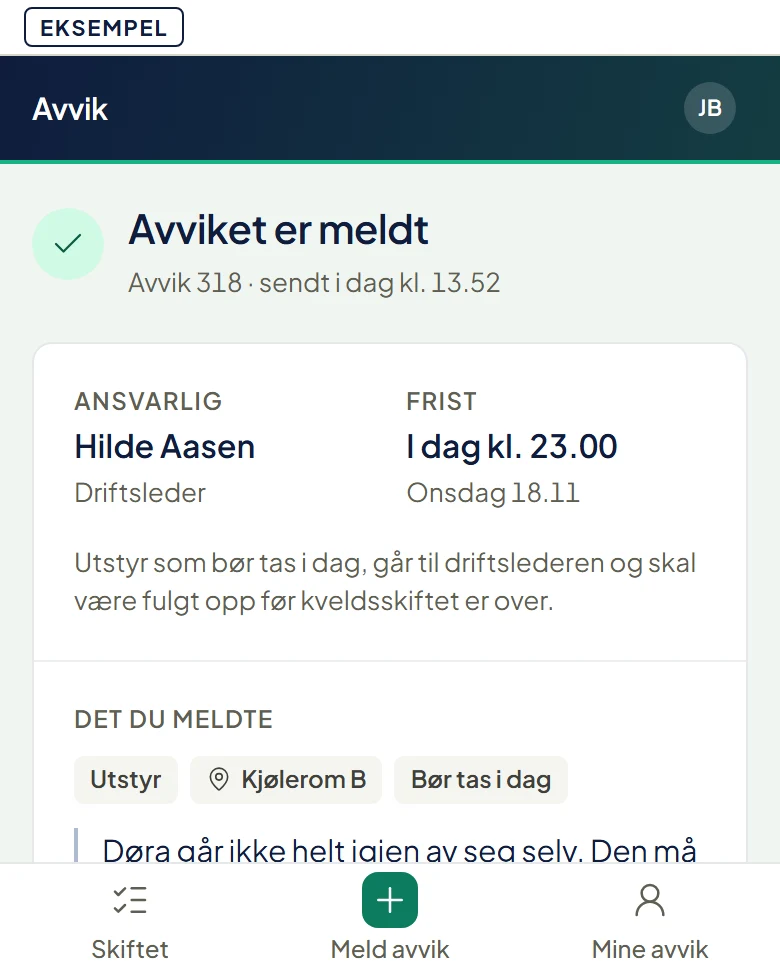
An issue gets an owner and a deadline
A fault is reported verbally on one shift and forgotten by the next. A solution could accept the report from a phone and give the person responsible a deadline. What was done is recorded before the case is closed. The next shift can see whether the fault has been followed up.
- Your part
- Issue types, responsibilities and what is required to close the case.
- Already built
- Forms, roles, deadlines, audit logs and rule-based retention and deletion.
Example 06
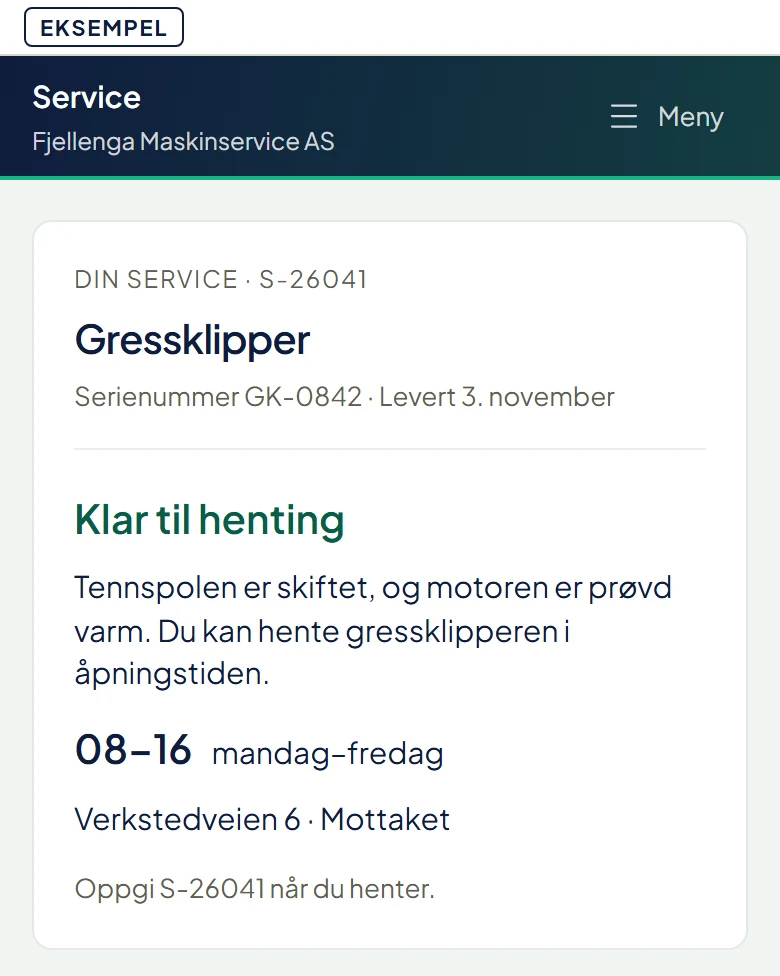
Track equipment through servicing
Equipment moves from reception to the workshop and back to the customer. A digital register could let staff record each step, who received the equipment and what was done. The customer can follow its status without calling the workshop.
- Your part
- The steps in the chain and what needs to be recorded at each one.
- Already built
- Audit logs, customer sign-in, notifications and QR codes.
Not on the list?
Your work may look quite different. Show us where information comes in, who does the work and what needs to be in place at the end.
How it works, from the first conversation to ongoing operations: the Apalos process. What is already built: the building blocks.
Talk to us
Which task would you like a clearer view of?
Tell us how you do it today and where work gets held up. That is enough to start.